

UK AQUATIC AND GARDEN SUPPLIES
Trapdoor Pond Snails – Algae Eating Pond Snails UK
Trapdoor Pond Snails – Algae Eating Pond Snails UK
Couldn't load pickup availability
Buy Trapdoor Pond Snails UK – Natural Algae Eating Pond Snails
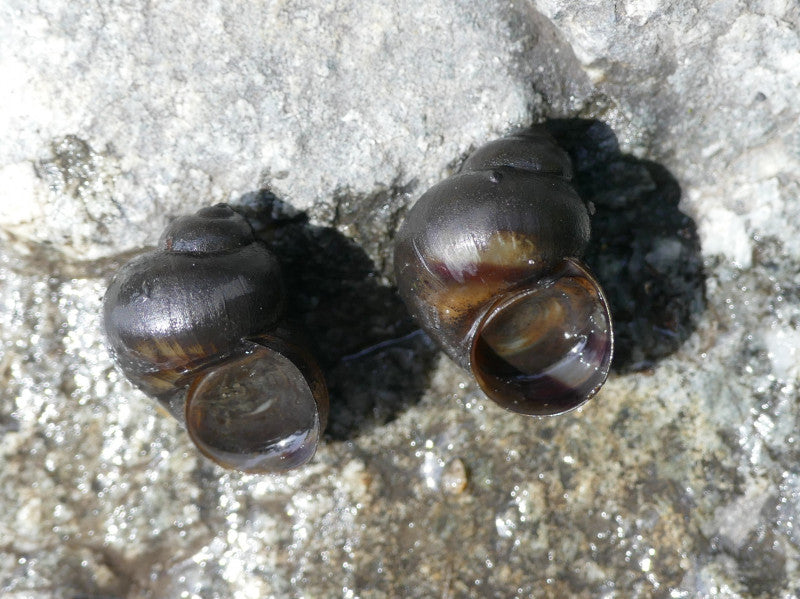
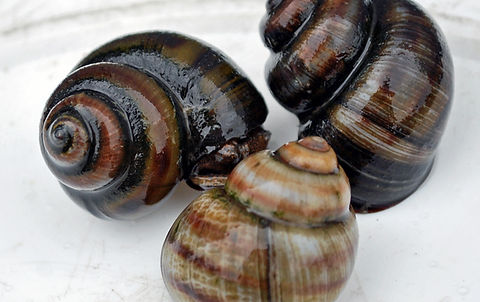
Healthy Trapdoor Pond Snails (Viviparus viviparus) for garden and wildlife ponds. These UK pond snails naturally graze on algae, decaying vegetation and organic matter, helping support a balanced pond ecosystem.
Trapdoor snails are particularly useful around pond edges, rocks, surfaces and amongst aquatic plants. They generally feed on algae and decaying plant material rather than healthy living plants, making them an excellent addition to planted ponds.
For outdoor ponds only – these are not suitable for indoor aquariums.
Not all snails will consume algae as effectively as a Trapdoor snail. Therefore, this is truly where the little scavengers stand out, as they are known to be the biggest algae eaters in the family.
Furthermore, Trapdoor snails are careful when it comes to grazing algae of a plant. Indeed, many are found of Trapdoor snails because they do not harm the plants in the pond; they merely scavenge around the stems and edges whilst only actively feeding on decaying plants.
Trapdoor snails reproduce rather slowly, meaning that you won’t need to worry about the number of snails in your pond, to begin with.
Unlike most snails, Trapdoor snails are not asexual, meaning they need to breed and find a mate. Therefore, their chances at reproduction are already reduced, to begin with.
Snails Reduce Levels Of Ammonia
Ammonia is an invisible killer for your pond / Tank. It is highly toxic and harmful to your fish. As such, it is better not to leave this hazard unchecked. But how does ammonia even enter your pond / Tank, to begin with?
In short, ammonia, a compound made of nitrogen and hydrogen, is released into the pond through waste. More specifically, it is spread through the breakdown of organic material. This includes various forms of waste and dirt, such as fish excrement, leftover food, dead plants, and decaying algae.
The Nitrogen Cycle
The Nitrogen cycle refers to the process that transforms ammonia into nitrate, which is eventually used to grow plants in your tank. However, a high level of nitrate in your pond will be harmful to the fish. Therefore, it is advised to clean the water and reduce the amount of nitrate in your pond.
As snails assist in reducing waste, thereby cleaning water overall, they indeed are a plus when it comes to safeguarding a healthy nitrogen cycle. Although snails can surely not take up the job themselves, they are natural and convenient little helpers nonetheless.
Average Size
Your snails will be a minimum of 12mm 1/2”. These grow on average to around 2”. While there are instances where this species has exceeded this, it’s quite rare. There are a number of factors that influence the size of this species. The main ones are water quality, diet, and how well they were raised or bred before you got them.
In short, freshwater snails are great for the ecosystem of your pond / Tank. As such, Trapdoor snails keep your water clean, take out the trash, eat organic leftovers, scrub the surface bottom, manage algae, reproduce at a slow rate, and reduce levels of ammonia. A must in pond or tank.
Allow 5-10 snails per m².
Live Snail Care & Live Arrival Guarantee
Acclimatisation on Arrival
When your snails arrive, we recommend floating the unopened bag in your pond or aquarium for approximately 30–60 minutes to allow the water temperature to equalise.
It is perfectly normal for Trapdoor Snails to remain inside their shells after transport. Please allow 24–48 hours for them to recover and begin moving naturally. Trapdoor Snails can seal themselves inside their shells using their hard operculum (trapdoor), enabling them to survive extended periods of transport or unfavourable conditions. They are very often mistaken for being dead when they are simply recovering.
A healthy Trapdoor Snail will normally remain tightly sealed inside its shell. If a Trapdoor Snail dies, the operculum (trapdoor) will usually detach from the shell, leaving the shell open. This is one of the clearest indicators that the snail has died. Please do not dispose of a snail simply because it has not moved for the first 24–48 hours.
Hot Weather Dispatch
To protect the welfare of our livestock, orders will be held whenever forecast temperatures are expected to exceed 30°C during transit. Orders will be dispatched as soon as temperatures return to a safe level. When temps are 25°C and above they will be sent with cooling packs.
Packaging & Delivery
All snails are professionally packed in fish-safe bags containing clean water and oxygen, before being placed inside a sturdy cardboard shipping box for maximum protection during transit. We never send live livestock in padded envelopes.
All live livestock is shipped using Royal Mail Tracked 24 Small Parcel. This is normally a next working day service; however, delivery times are not guaranteed, and occasional delays within the Royal Mail network are outside our control.
Live Arrival Guarantee
We proudly offer a Live Arrival Guarantee on all live livestock.
To qualify for this guarantee:
-
The parcel must be received on the first delivery attempt.
-
Someone must be available to accept delivery. If the parcel is left unattended, in a safe place, with a neighbour, or is not opened promptly after delivery, our Live Arrival Guarantee is void.
-
Snails must be acclimatised as described above and given at least 24–48 hours to recover before they are considered to have a problem.
-
Any issues must be reported within 48 hours of delivery, together with clear photographs of the livestock and packaging.
Responsibility After Delivery
Once livestock has been introduced into your pond or aquarium, responsibility for their ongoing health passes to the customer.
We cannot accept responsibility for losses resulting from factors outside our control, including but not limited to:
-
Water quality or water chemistry.
-
Ammonia, nitrite or nitrate levels.
-
Temperature fluctuations.
-
Lack of oxygenation.
-
Pond or aquarium conditions.
-
Predation.
-
Incorrect acclimatisation.
-
Compatibility with existing livestock.
We are always happy to provide advice if you experience any issues after introducing your new livestock.